The mining floor
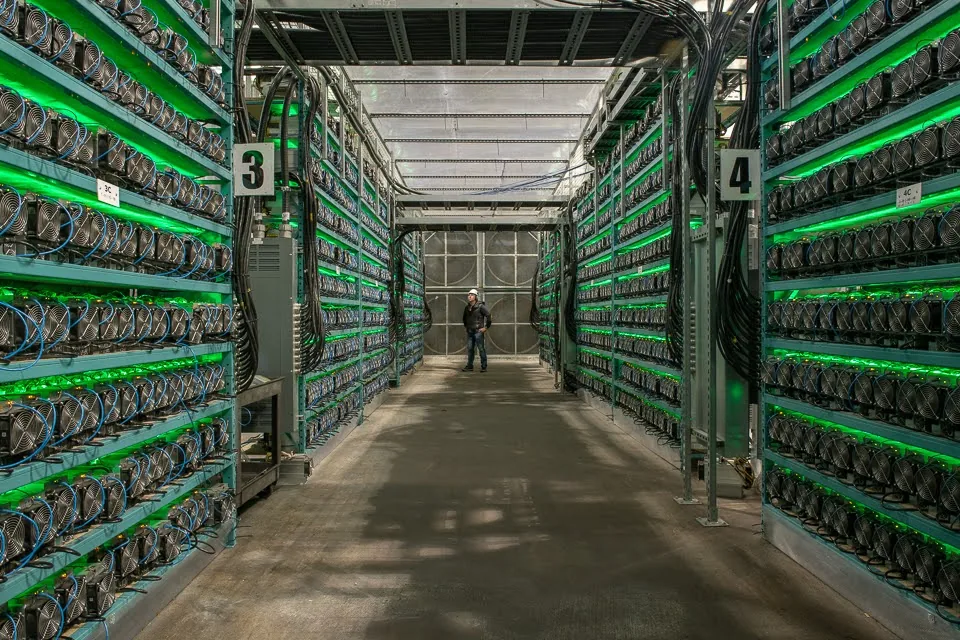
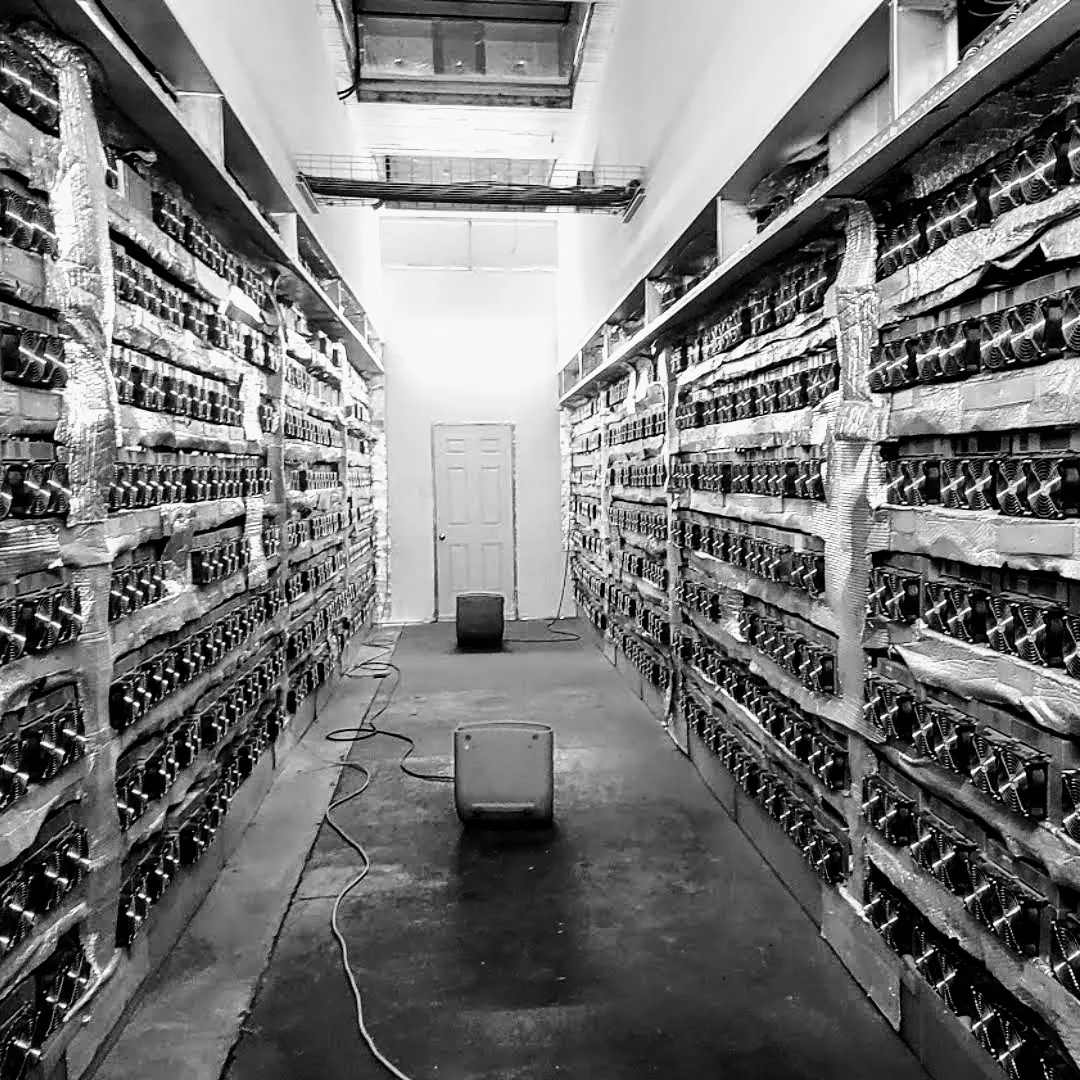
The mining floor is where your miners live. Rows of steel racks hold ASICs shelf by shelf, with every row numbered so technicians can find any machine quickly. Wide aisles between racks give staff room to swap units, inspect cabling and check status lights without disturbing neighbouring machines. Every miner is cabled for power and network and pointed at its owner’s mining pool. The facility has 530 miner spots in total.
Notice how the racks face the same direction. Miners pull cool air in from one side and push hot air out the other, so arranging them consistently keeps intake air and exhaust air from mixing.
Why the floor is loud, warm and busy
Walk onto any mining floor and the first thing you notice is the sound: hundreds of miner fans running at full speed, day and night. The second is the heat on the exhaust side of the racks. Both are normal, and both are exactly why miners belong in a purpose-built facility rather than a home or office. Our technicians work in this environment every day, watching for units that drop offline and keeping cabling and airflow in order.
Air intakes: bringing in cold, filtered air
The large sheet-metal boxes in several photos are intake air handlers. They draw outside air into the building through 8 intake ducts and deliver it to the front of the racks, with 156 summer/winter air filtration keeping dust out. For most of the year, Quebec’s climate means that air is cold enough to cool miners directly, which is the core advantage of air-cooled hosting in Canada.
Exhausts: removing the heat
A modern ASIC turns almost all of the electricity it uses into heat, so getting that heat out of the building is as important as bringing cold air in. The rooftop fans and ceiling ducting you can see are part of our 4 exhausts, which pull heated air away from the racks and push it outside.
Security you can see
Look closely and you will notice the facility is built to keep people out as well as to keep air moving. Access is controlled by two layers of security plus city-integrated security, and video surveillance covers the site. The facility is insured, secured and monitored, with insurance against theft, water and fire damage.
Three photo categories, explained
The gallery is grouped into three categories. Mining floor shows the racks, rows and aisles where miners run. Air cooling shows the intake air handlers, ducting and rooftop exhausts that move filtered air through the building. Power shows the transformers, breaker panels and disconnects that deliver electricity to every rack. Together they show the three things a hosting facility has to get right: space, cooling and power.
Power distribution
The photos of panels, disconnects and transformers show how power reaches your miners. Utility power arrives at high voltage and is stepped down by transformers, then distributed through breaker panels and disconnects to each rack. Neat conduit runs and labelled panels are a good sign that a facility’s electrical work has been planned rather than improvised. Our infrastructure is CSA-built.
Cable trays and network
Overhead cable trays carry power and network cabling above the aisles, keeping floors clear and making it easy to trace any connection. Fiber-optic internet connects the facility for low-latency, high-stability performance, so your miners stay in sync with your pool.
How a new miner gets installed
When your miners arrive, they are checked in and labelled with their owner and position before going anywhere near a rack. Your original boxes go into storage, free of charge. Our technicians then place each unit on its shelf, connect power and network cabling, and confirm it boots and reaches its expected hashrate. Finally the miner is pointed at the mining pool you choose. The racking fee is $35 USD per miner, one time per connection or boxing out, and for most orders the whole process is completed within one to two business days.
From then on, technicians walk the floor, watch for units that drop offline, and handle onsite miner repairs and part replacement wherever possible.
Repairs happen right here
Some of the most important work in the facility is the least photogenic. When a miner drops offline, a technician pulls it, diagnoses it with industry testers and replaces the failed part, whether that is a fan, a power supply, a control board or a hashboard. Because this onsite miner repair and part replacement happens in the same building, most miners are back on the rack quickly. For hosted miners, labour is usually included and you only pay for spare parts.
Planning a visit after the photos
If the photos have you curious, the next step is a visit. Fly into Montreal–Trudeau International Airport (YUL) and reach the facility in about 35 minutes. Visits are by appointment only and walk-ins will be refused, so contact us with your preferred dates and we will arrange a walkthrough.
Questions people ask after seeing the photos
Can I see my own miners? Yes, by appointment. Where do my boxes go? Into free miner box storage on site. Are the miners water-cooled? No, the facility uses filtered air cooling and hosts air-cooled miners. How many miners fit? The facility has 530 miner spots. Who fixes a miner when it fails? Our technicians, on site, with labour usually included for hosted miners.
What to look for when you evaluate a host
Photos are a useful first look, but the best way to judge a hosting facility is in person. When you visit any host, check that airflow is organised, air is filtered, electrical work is tidy and labelled, security controls access, and staff are actually on site. Ask what happens when a miner goes offline, how repairs are handled and what is included in the rate.
We welcome these questions. Our facilities are open for visits by appointment, and our FAQ answers the most common ones.