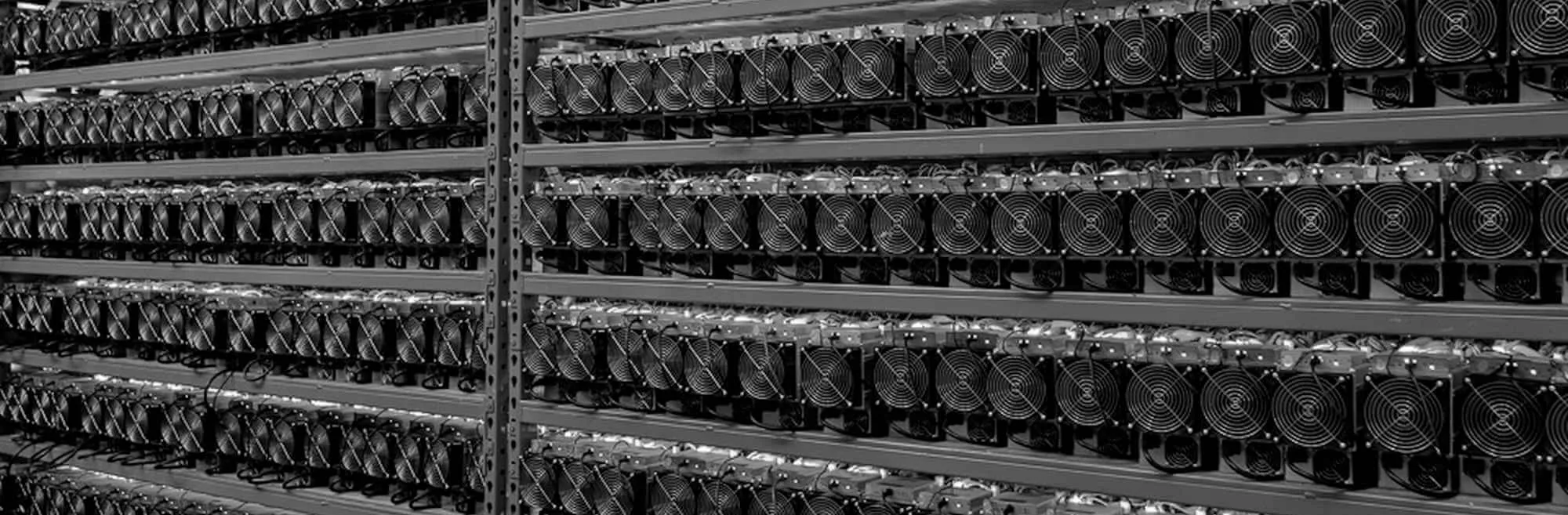
Break-even electricity price, by miner
If you only track one number in mining, track this one. The break-even electricity price is the rate at which a given machine earns exactly what it costs to run. Below it you make money; above it you lose money every hour the machine is on.
It is more useful than daily profit, because daily profit is a snapshot of today's Bitcoin price and today's difficulty, while break-even tells you how much weather your position can take. And it is the only fair way to compare hosting quotes, because it converts a spec sheet and a rate card into a single comparable figure.
The formula
Two lines, then a division.
- Daily revenue = hashrate (TH/s) × hashprice (USD per TH/s per day)
- Daily energy = power (kW) × 24 hours
- Break-even price = daily revenue ÷ daily energy
Hashprice is the piece people are least familiar with. It is simply what the network pays per unit of hashrate per day, and it is published by mining data providers and visible in your pool's earnings rate. It moves constantly with the Bitcoin price, the network difficulty and transaction fees.
A worked example
Take an Antminer S23: 305 TH/s, drawing 3,355 W at the wall.
- Energy per day: 3.355 kW × 24 = 80.5 kWh
- At $0.075 per kWh (miner quantity and availability based), power costs $6.04 per day
- Our published estimate for this machine is $6.30 profit per day at that rate
- So revenue must be $6.30 + $6.04 = $12.34 per day
- Break-even price = $12.34 ÷ 80.5 kWh = about $0.153 per kWh
Read that as: the S23 keeps earning until electricity costs about fifteen cents a kilowatt-hour. That is a lot of headroom, and it is what you are paying for when you buy efficient hardware.
Break-even by machine
Every figure below is derived the same way, from the same published estimates at that rate, so the models are directly comparable with each other.
| Miner | Hashrate | Power | Efficiency | Break-even |
|---|---|---|---|---|
| Antminer S23 | 305 TH/s | 3,355 W | 11.0 J/TH | $0.153 / kWh |
| Antminer S21 XP | 270 TH/s | 3,645 W | 13.5 J/TH | $0.125 / kWh |
| Antminer S21 Pro | 234 TH/s | 3,510 W | 15.0 J/TH | $0.112 / kWh |
| Antminer S21+ (235 TH/s) | 235 TH/s | 3,525 W | 15.0 J/TH | $0.112 / kWh |
| Antminer S21+ (225 TH/s) | 225 TH/s | 3,375 W | 15.0 J/TH | $0.112 / kWh |
| Antminer S21+ (216 TH/s) | 216 TH/s | 3,564 W | 16.5 J/TH | $0.102 / kWh |
| Antminer S21 | 200 TH/s | 3,500 W | 17.5 J/TH | $0.096 / kWh |
| WhatsMiner M60S | 186 TH/s | 3,441 W | 18.5 J/TH | $0.091 / kWh |
| Antminer T21 | 190 TH/s | 3,610 W | 19.0 J/TH | $0.089 / kWh |
The pattern is not subtle: break-even tracks efficiency almost exactly. Hashrate on its own tells you very little — the T21 produces more terahash than the M60S and still breaks even lower, because it burns more watts doing it.
Why efficiency beats hashrate
It is worth sitting with the comparison between the T21 and the M60S, because it contradicts the instinct most buyers arrive with.
The T21 is the faster machine: 190 TH/s against the M60S's 186 TH/s. It produces more hashrate, so it earns more revenue per day. And it still breaks even lower, because it burns 3,610 W to do it against the M60S's 3,441 W. Work it through:
- Antminer T21: 3.610 kW × 24 = 86.6 kWh/day. At that rate it is $6.50 of power against an estimated $1.19 profit — so revenue of about $7.69, and a break-even of $0.089/kWh.
- WhatsMiner M60S: 3.441 kW × 24 = 82.6 kWh/day. At that rate it is $6.19 of power against an estimated $1.34 profit — so revenue of about $7.53, and a break-even of $0.091/kWh.
The M60S earns less revenue and is still the more durable position, because it converts power into hashrate slightly more efficiently. That is the whole argument for reading J/TH before TH/s.
Hashrate tells you how much work a machine does. Efficiency tells you how long it is allowed to keep doing it. In a market where difficulty only ever trends upward between hardware generations, the second number is the one that decides when your machine gets switched off for good.
It is also why the gap between the top and bottom of the table matters so much. An S23 at $0.153/kWh and a T21 at $0.089/kWh are not two points on a spectrum — they are two completely different businesses. The S23 can absorb a difficulty increase, a price drop and a rate rise and still be running. The T21 cannot absorb any of them.
What this means against a hosting rate
Our all-inclusive band is $0.072–$0.089 USDT per kWh. Lay that over the table and the picture is immediate:
- S23, S21 XP, S21 Pro, S21+: comfortable headroom at either end of the band. These machines can absorb a meaningful fall in hashprice before they stop earning.
- S21 and M60S: workable, with less room. A sustained drop in hashprice narrows them quickly.
- T21: profitable at the bottom of the band and close to break-even at the top. On this machine the rate you are quoted genuinely decides the outcome.
We publish that last line rather than hiding it. A host who tells you every machine is a great fit at their rate is not describing mining, and you would find out in month three anyway.
Why your break-even price moves
The figure is not fixed. Four things move it, three of them outside anyone's control.
Network difficulty
Bitcoin retargets difficulty every 2,016 blocks — roughly every two weeks — so blocks keep arriving about every ten minutes no matter how much hashrate is competing. When hashrate joins the network, difficulty rises and every existing machine earns proportionally less. Your hardware has not changed; its share has.
The Bitcoin price
Revenue is denominated in bitcoin and your costs are denominated in dollars. A rising price raises every machine's break-even figure; a falling price lowers it, and machines near the line go underwater without anything physical changing.
The halving
Roughly every four years the block subsidy halves. April 2024 took it from 6.25 to 3.125 BTC per block, and the next is expected around 2028. The issuance half of mining revenue is cut in two overnight. Historically price has eventually absorbed it. There is no rule that says it must, and "my machine is marginal today" plus "a halving is coming" is a position worth examining early.
Transaction fees
Fees are the part of revenue nobody models well. In quiet periods they are a rounding error; during congestion they can add meaningfully to block rewards. They move break-even upward when they spike, and they are unpredictable.
Using break-even as a buying test
Three ways this number earns its keep:
- Comparing machines. Ignore hashrate and headline price for a moment and rank candidates by break-even. The machine with the higher figure survives longer in a downturn, and in mining, survival is most of the return.
- Comparing hosting quotes. Take each quoted rate, add every fee that sits outside it, and measure the gap to your machine's break-even. The quote with the biggest honest gap wins, which is not always the one with the lowest headline rate.
- Deciding when to switch off. If hashprice falls far enough that a machine is above its break-even, running it burns money. Knowing the number in advance turns that into a decision rather than a discovery.
Run it on today's numbers
Every figure here is calculated at that same rate and at the hashprice implied by our published estimates. Both move. Our mining profitability calculator lets you enter today's hashprice from your own pool and any hosting rate you like, and recalculates profit per day, per month, per year and the break-even price for every machine in the table.
For what sits inside a hosting rate — and why any honest provider quotes a band rather than one number — see hosting cost per kWh. For the broader question of whether mining pays at all right now, we have written that up at is Bitcoin mining profitable.
And if you want these numbers run against the exact machines you own, send us the model mix. We will tell you where your fleet sits against our rate — including when the answer is that some of it should not be hosted at all.
More mining & hosting insights
Shipping ASIC miners to Canada: what actually happens at the border
Getting mining hardware into Canada is routine freight, done thousands of times a year. It becomes difficult in exactly one situation: when the shipper improvises the customs side and finds out what they got wrong after the shipment has alr
Read more
Hosting vs home mining: which one actually pays?
Every few months someone works out that a Bitcoin miner is just a computer, puts one in a spare room, and discovers over the following weeks why industrial mining facilities exist. This is not a failure of enthusiasm. It is arithmetic, and
Read more