Shipping ASIC miners to Canada: what actually happens at the border
Getting mining hardware into Canada is routine freight, done thousands of times a year. It becomes difficult in exactly one situation: when the shipper improvises the customs side and finds out what they got wrong after the shipment has already left.
This guide covers what actually happens between your hardware and our racks, what a customs broker needs from you, and the mistakes that strand machines in a warehouse. We host miners for owners in Canada, the United States and elsewhere, so we see the same handful of problems repeat.
One thing first, stated plainly: we are a hosting provider, not a customs broker. Nothing here is customs, legal or tax advice, and classification and duty treatment depend on the specifics of your shipment. Engage a licensed customs broker before the hardware moves.
The short version
- Use a licensed customs broker. This is the single decision that prevents most problems.
- Decide who is the importer of record before you book freight.
- Get the commercial invoice right: realistic value, correct quantity, origin, and a plain description.
- Pack for freight, not for a car trip. Original boxes and foam exist for a reason.
- Tell your host what is coming and when, so arrival is confirmed against expectation.
- If you would rather skip all of it, buy the machines in-country and have them delivered straight to the racks.
Who is the importer of record?
This is the question that catches people, and it should be settled before anything ships. The importer of record is the party legally responsible for the import: the declaration, the classification, any duties and taxes, and the records afterwards.
For an owner outside Canada there is more than one workable arrangement, and which one suits you depends on whether you are a business or an individual, whether you are registered for Canadian sales tax, and what your broker advises. The failure mode is not choosing — hardware arrives, nobody is named as responsible, and the shipment sits in a bonded warehouse accruing storage charges while people exchange emails.
Your host is not automatically the importer. We receive, rack and run your machines; we do not take title to them, and that ownership distinction is exactly why the import is yours to arrange.
Documentation that makes a shipment boring
Boring is the goal. A broker will typically want:
- A commercial invoice showing each machine, quantity, unit value, total value, currency, country of origin and a clear description.
- The shipping paperwork — air waybill or bill of lading from the carrier.
- Tariff classification, which your broker determines. ASIC miners have been classified more than one way over the years and it has a direct effect on duty treatment, so this is a question for a professional rather than a forum thread.
- Your business and tax registration details, if you are importing as a company.
- Serial numbers, ideally. Not always required, but it makes receiving unambiguous and it is what you will want if there is ever an insurance claim.
The valuation mistake
The most common and most expensive error is declaring a value that is not defensible. Undervaluing a shipment to reduce taxes is not a clever tactic; it is a misdeclaration, and customs authorities have a good sense of what mining hardware is worth.
Used hardware genuinely is worth less than new, and that is fine — declare the real transaction value and keep the evidence. If you bought ten second-hand S21s at a documented price, the invoice reflects that.
Taxes at the border
Canada applies federal sales tax on commercial imports at the time of import, and whether you can recover it depends on your own registration status. Provincial treatment varies. This is precisely the kind of question your broker and your accountant should answer together before you ship, because the answer changes the cash you need at the border.
Packing: boring advice that saves hashboards
Mining hardware is heavy, dense and surprisingly fragile in transit. Hashboards are held by connectors that do not enjoy being dropped.
- Use the original box and foam if you still have it. It was designed for this. (This is also why we store your miner boxes free while you host — you will want them when the machines eventually move.)
- Palletise for anything over a handful of units. Shrink-wrapped and strapped, with corner protection.
- Do not ship machines with PSUs loose in the box. A power supply rattling around inside is a hashboard-shaped problem on arrival.
- Label the pallet clearly with the consignee and your reference, so receiving can match it to the account.
- Insure the shipment. Freight insurance is cheap relative to a pallet of ASICs.
Air freight or sea freight?
For most hosted orders moving within North America this is a courier or road-freight decision rather than a transoceanic one, and the trade-off is simply speed against cost.
From Asia, the decision is sharper. Air freight is fast and expensive; sea freight is slow and cheap. The thing people forget is that a miner in a container is not earning. Several weeks of lost production can cost more than the freight saving, especially on efficient hardware — so run the comparison with your machine's daily profit in it rather than on freight cost alone.
If you are buying new hardware from a manufacturer, check whether the price is quoted delivered-duty-paid or whether the import is yours to arrange. The two prices are not comparable and the difference is rarely small.
What happens when it reaches us
Our side is deliberately unexciting:
- Receiving. We confirm what arrived against what you told us to expect, and flag anything that does not match — wrong model, wrong count, visible transit damage.
- Racking and cabling. Machines go into the racks and onto the PDUs.
- Network and pool. We configure networking and point the miners at your pool, using the details you provide at setup.
- Hashing. Most orders are producing within one to two business days of arrival, depending on size.
- Billing. Monthly in advance at your quoted rate, in Bitcoin, USDT or bank wire.
Mined bitcoin goes to your pool account and your wallet. We never hold your coins, and we never take ownership of your hardware.
The option that removes the problem
If the customs process sounds like more administration than it is worth — and for a first order of five or ten machines, it reasonably might — there is a way around it entirely: buy the hardware through us.
With an equipment + hosting package, we source the machines and they are delivered straight to our racks. There is no shipment for you to arrange, no broker to appoint, no border for your hardware to cross and no setup at your end. You get one agreement covering the equipment and the hosting, and the machines are yours.
For owners in the United States specifically, we have written up the wider cross-border picture — ownership, billing in US dollars, visits and moving out — on our hosting for US miners page.
A short checklist before you book freight
- Broker appointed and briefed.
- Importer of record decided, in writing.
- Commercial invoice prepared: realistic values, origin, quantities, descriptions.
- Tariff classification confirmed by the broker.
- Tax position understood — what is payable at the border and what is recoverable.
- Machines packed in original boxes, palletised, PSUs secured.
- Shipment insured.
- Host notified: model mix, quantity, carrier, expected arrival, pool details.
Work through that and the border stops being an event. Skip the first two and it becomes the most expensive part of the project.
Shipping miners to our Quebec facility and want to sanity-check the plan? Tell us what is coming and we will confirm what we need on our end — and tell you honestly if buying in-country would be simpler.
More mining & hosting insights
Break-even electricity price, by miner
If you only track one number in mining, track this one. The break-even electricity price is the rate at which a given machine earns exactly what it costs to run. Below it you make money; above it you lose money every hour the machine is on.
Read more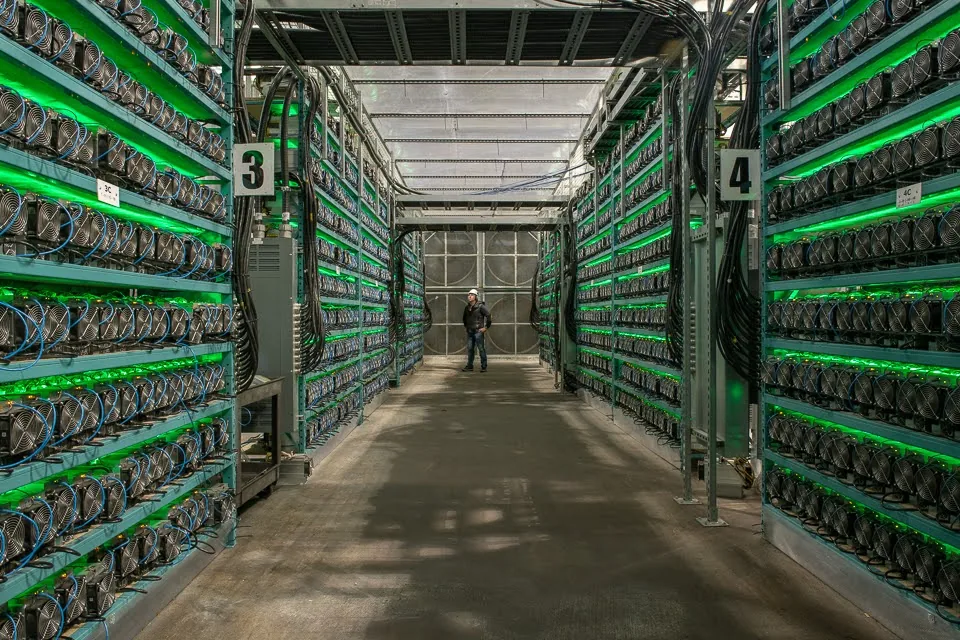
Hosting vs home mining: which one actually pays?
Every few months someone works out that a Bitcoin miner is just a computer, puts one in a spare room, and discovers over the following weeks why industrial mining facilities exist. This is not a failure of enthusiasm. It is arithmetic, and
Read more
Bitcoin Data Center: Why Professional Hosting Changes Your Mining Operation
Bitcoin mining data centers provide efficient power redundancy, modern cooling systems, and around-the-clock technical support compared to a home mining rig. Professional miner data centers operate at an ideal temperature, which minimizes s
Read more